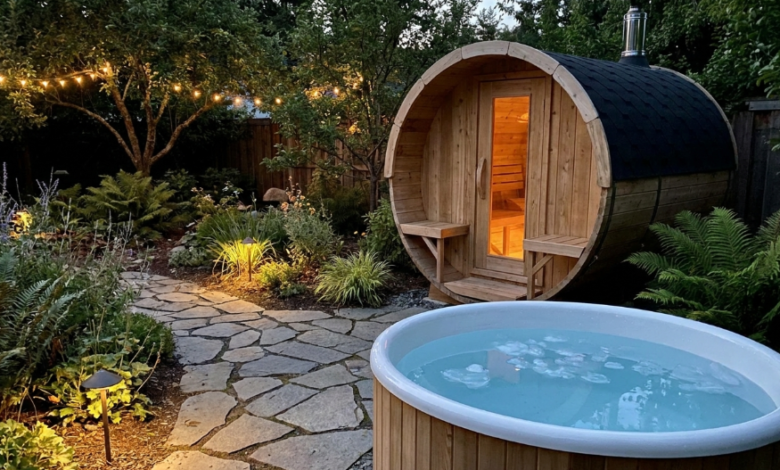
An outdoor sauna is a wood or composite cabin, usually electric or wood-heated, that reaches 150 to 195 degrees Fahrenheit and sits outside the main house on its own pad or deck. First-time owners generally spend $3,000 to $9,000 on the unit and installation, use it two to four times a week for 15 to 20 minutes a session, and spend under an hour a month on upkeep once it is running. The learning curve is shorter than most people expect: the real decisions come down to heat source, size, and where it sits in the yard.
Electric versus wood-fired: which is easier to start with
Electric saunas heat with a resistance element wired to a dedicated circuit, usually 240 volts for anything larger than a one-person unit. They reach temperature in 30 to 45 minutes, hold it steadily, and can be set on a timer so the cabin is ready when you walk out the back door. Wood-fired saunas use a cast-iron stove and a stack of sauna rocks, take 45 to 75 minutes to come up to heat, and need a supply of dry, seasoned wood plus regular ash cleanout. For a beginner, electric removes most of the friction, no fuel to store, no fire to tend, no smoke smell drifting into the yard, while wood-fired rewards people who like the process as much as the heat itself.
Barrel versus cabin: which shape suits a first sauna
Barrel saunas are the round, stave-built style most people picture, and they run smaller and cheaper, often $2,500 to $5,500 for a two- to three-person unit. Their curved roof sheds rain and snow well and needs less framing lumber, which keeps the price down. Cabin saunas are square or rectangular, sized from two to eight people, and cost more, typically $4,000 to $12,000 depending on size and heat source, but they use floor space more efficiently and are easier to fit a bench layout, a window, or a small changing area into. For a couple or a family that plans to use the sauna together, a cabin generally makes better use of the same footprint than a barrel does.
Infrared versus traditional: a different kind of heat
Traditional saunas heat the air, which then heats the body, and they run hotter, often 170 to 195 degrees. Infrared cabins use panels that warm the body more directly at a lower ambient temperature, usually 120 to 140 degrees, so sessions feel less intense even though the body still sweats. Infrared units also tend to cost less to buy, $1,800 to $3,500 for a two-person cabin is common, and they draw less power, which matters if the home’s electrical panel is already close to capacity. People who find high heat uncomfortable, or who want a lower-cost entry point, often start with infrared before deciding whether to add a traditional unit later.
What a first year of ownership actually costs
Beyond the purchase price, budget for electrical work if the unit needs a dedicated circuit, typically $500 to $1,500 depending on how far the panel is from the install site, plus a base of gravel, pavers, or a small deck, $300 to $3,000 depending on material. Running costs are modest: an electric heater used four times a week adds roughly $15 to $35 a month to a power bill, depending on local electricity rates and session length. Wood-fired units skip the electric cost but add the price of firewood, usually $20 to $40 a month for regular use. None of these numbers include a cold-plunge tub, which is a common add-on but not a requirement to get started.
What the research says about regular use
Sauna bathing has been studied most extensively in Finland, where a large share of the population uses one regularly, and a 2023 review in Mayo Clinic Proceedings summarizing that body of work found consistent associations between frequent sauna use and better cardiovascular markers, along with reported improvements in mood and perceived relaxation. A separate physiology review on the effects of heat and cold on the body notes that these associations strengthen with regularity, not with a single long session, which lines up with the ownership pattern of most beginners: shorter sessions, more often, beat occasional marathon sits. As with any heat-based habit, these are associations from observational research, not guarantees, and people with heart conditions or who are pregnant should talk to a doctor about what frequency and duration make sense for them.
Common first-timer mistakes worth avoiding
New owners most often underestimate two things: how far the sauna sits from the house, and how much electrical work a traditional heater needs. A unit placed at the back of a large yard gets used less often simply because the walk feels like a bigger commitment than it should, so a short, direct, well-lit path matters more than a scenic, private corner. On the electrical side, a lot of first-time buyers assume any outdoor outlet will work, then find out mid-install that a 240-volt heater needs its own circuit run from the panel, which is a job for a licensed electrician and worth pricing out before the sauna itself is ordered, not after.
Getting your first sauna set up without overspending
Before buying, compare listed footprints, voltage requirements, and warranty length across a few sellers rather than the first listing that shows up in a search. Spending an evening on one specialty retailer to see how models, prices, and included accessories stack up against general home-improvement listings usually saves money, because bundled accessory kits and freight-included pricing vary more than people expect between sellers. A little comparison shopping up front is worth more than any accessory you could add later.
Frequently Asked Questions
Is an outdoor sauna hard to maintain?
Not really. Wipe down the benches after each use, vacuum out rock dust and dust from the heater every month or two, and reseal cedar exteriors every two to three years. Electric and infrared units need almost no upkeep beyond that.
How long does it take an outdoor sauna to heat up?
Electric heaters typically reach 170 to 190 degrees Fahrenheit in 30 to 45 minutes. Wood-fired stoves take longer, often 45 to 75 minutes, and infrared cabins warm the body faster at a lower air temperature, usually within 15 to 20 minutes.
Do beginners need a wood-fired or an electric sauna?
Electric is the easier starting point for most households because it heats predictably, needs no fuel storage, and can run on a timer. Wood-fired appeals to people who want the ritual and smell of a real fire and do not mind tending it.
How often should a beginner use a new sauna?
Two to four sessions a week of 15 to 20 minutes is a reasonable starting point. Build up gradually, stay hydrated, and step out any time you feel lightheaded rather than pushing through it.
References
- Does the Combination of Finnish Sauna Bathing and Other Lifestyle Factors Confer Additional Health Benefits? A Review of the Evidence, Mayo Clinic Proceedings, 2023
- Effects of heat and cold on health, with special reference to Finnish sauna bathing, American Journal of Physiology, 2018
- Cardiovascular and Other Health Benefits of Sauna Bathing: A Review of the Evidence, Mayo Clinic Proceedings, 2018